AI-Personalized Learning: Tailored Study Strategies That Work
How AI Personalizes Education for You: Smarter, Tailored Study Strategies
Personalized learning uses data about pace, strengths, gaps, and preferences to shape what to study next and how to practice. Modern AI tools can turn that idea into an everyday workflow—adapting difficulty, selecting practice sets, recommending resources, and helping build routines that fit real schedules. This guide breaks down practical ways AI personalizes learning and how to apply them for faster understanding and better retention. For more guidance, see AI Can Deliver Personalized Learning at Scale, Study Shows.
What “personalized learning” means in daily study
Personalization is less about a “custom course” and more about making better study decisions session by session. Instead of moving through a fixed chapter order, AI-supported study can adjust what you see, how fast you move, and what kind of practice you do. For further reading, see Artificial intelligence in education: a systematic review of ….
- Adapting content: choosing topics, examples, and explanations that match your current understanding.
- Adapting pace: accelerating through mastered material while slowing down for concepts that need repetition.
- Adapting practice: selecting question types and difficulty that target specific gaps (not just general review).
- Adapting format: switching between summaries, worked examples, flashcards, quizzes, and teach-back prompts based on what helps learning stick.
- Personalization vs. convenience: using AI to improve learning choices, not to skip the learning by “getting answers.”
Common AI personalization features and what they improve
| AI feature | What it personalizes | Study benefit | Example use |
|---|---|---|---|
| Adaptive quizzes | Difficulty and topic selection based on performance | Less time on what’s already mastered; more targeted review | Auto-generated mixed quiz that prioritizes weak subtopics |
| Spaced repetition support | Review timing based on forgetting risk | Improves long-term retention with fewer total reviews | Daily flashcard queue adjusted after each recall attempt |
| Step-by-step feedback | Hints and explanations tuned to the error type | Fixes misconceptions instead of memorizing procedures | Hints that address the exact step where reasoning breaks |
| Learning path recommendations | Sequence of concepts and prerequisites | Reduces overwhelm; prevents “missing basics” | Suggested order: fundamentals → practice → application project |
| Summarization and rephrasing | Language level, tone, and examples | Faster comprehension for dense material | Rewrite a textbook section using simpler analogies |
| Progress dashboards | Goals, streaks, and mastery estimates | Clear next steps and measurable momentum | Weekly report of strengths, weak areas, and next objectives |
How AI figures out what you need next
Most personalization engines rely on a loop: practice → data signals → updated estimate of your skills → next recommendation. The quality of personalization depends on the quality of the signals.
- Signals from performance: accuracy, time-to-answer, consistency, and repeated error patterns.
- Signals from behavior: what gets skipped, rewatched, or abandoned; where attention drops.
- Knowledge graphs: mapping skills and prerequisites to diagnose what’s blocking progress.
- Mastery estimation: approximating confidence for each skill and updating it after practice.
- Limits to remember: estimates can be wrong when practice sets are tiny, hints are overused, or tasks don’t match the exam or project format.
For a broader perspective on benefits and risks (including equity and governance), see UNESCO’s guidance on AI in education and the U.S. Department of Education’s AI resources.
Tailored study strategies AI can generate (and how to make them work)
AI shines when you treat it as a coach for planning, practice design, and feedback—then you do the retrieval and reasoning yourself. These strategies are simple, but they scale across subjects.
- Run “diagnostic first” sessions: quick baseline quiz → targeted micro-lessons → focused practice → re-test.
- Keep an error journal with AI: paste missed questions and ask for a classification (conceptual vs. procedural vs. careless) plus a fix plan.
- Turn weak topics into micro-sprints: 15–25 minutes, one objective, one measurable exit ticket (a short problem set or a teach-back).
- Request multiple explanation styles: intuitive overview, formal definition, worked example, and a self-check question.
- Build a weekly cadence: 2–3 deep work blocks for new learning plus short daily reviews for retention.
- Prevent false confidence: require no-notes retrieval and a plain-language explanation before marking a topic as “mastered.”
Personalization for different learners and goals
“Best” personalization changes with your schedule, target outcome, and how you prefer to process information.
Choosing the right AI learning setup
A simple 7-day personalized learning sprint
Digital guide: turning AI personalization into a repeatable study system
How AI Personalizes Education for You – AI for Personalized Learning eBook
Helpful study add-ons for consistent routines
- Wireless Gaming Earbuds with 4 Mics, ENC Noise Canceling & 26H Playtime (useful for focus blocks, lectures, and spoken-language drills)
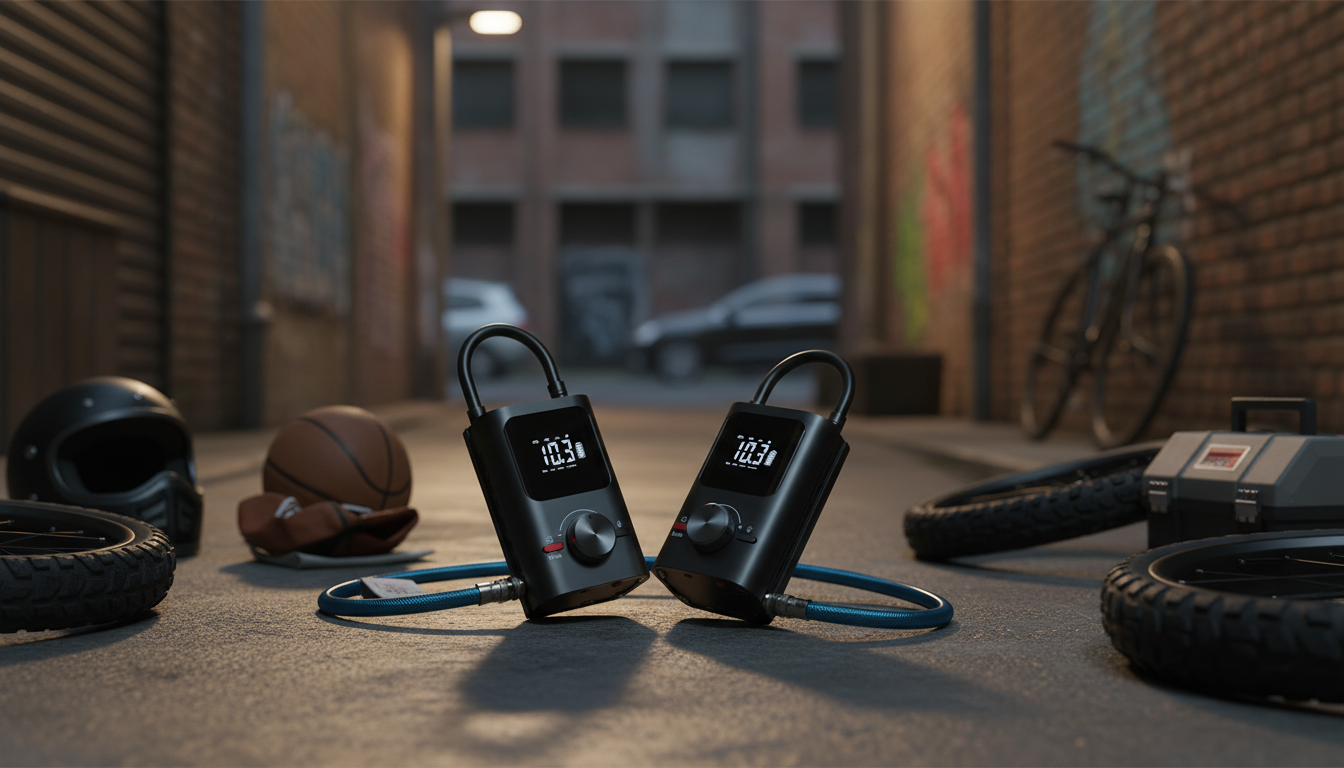
- 100W 20000mAh Fast Charging Power Bank for Laptop & iPhone 16/15 Pro Max (helps keep long study sessions uninterrupted)
FAQ
Does AI personalized learning replace a teacher or tutor?
No. AI can support planning, targeted practice, and fast feedback, while teachers and tutors add human judgment, context, motivation, and instructional nuance that tools can’t reliably replicate.
How can AI personalize study without collecting too much personal data?
Use minimal inputs like topic lists and practice results, avoid uploading sensitive identifiers, and choose tools that let you control what’s stored. Reviewing privacy settings and limiting shared documents keeps personalization focused on learning signals instead of personal details.
What’s the fastest way to see results from a personalized AI study plan?
Start with a short diagnostic, pick 1–3 weak areas, do no-notes retrieval practice, track your errors, and re-test within a week. The quick re-test confirms whether the plan is working and what to adjust next.




Leave a comment